The Hot Gas Halo of the Sombrero Galaxy (M104)
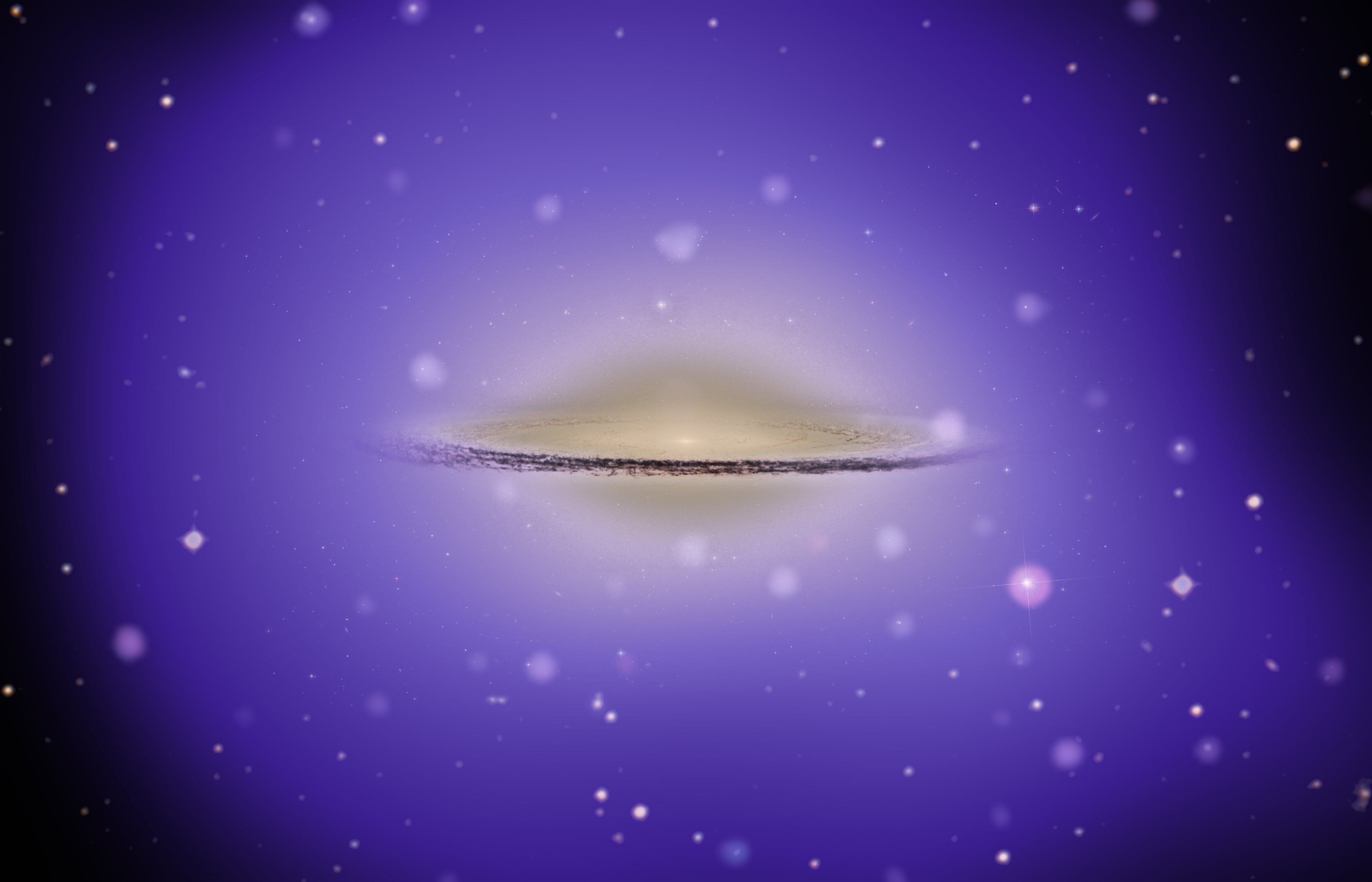
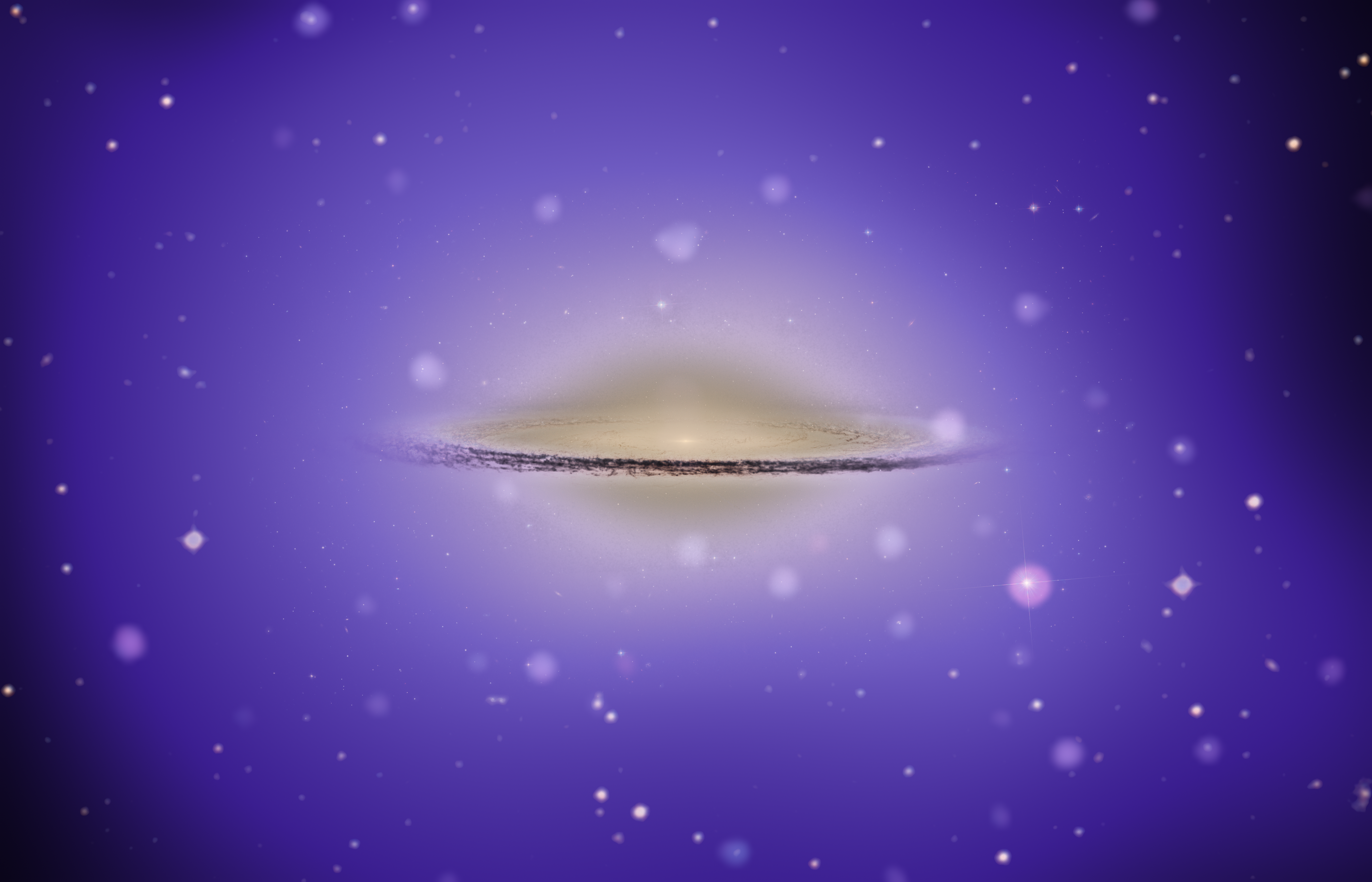
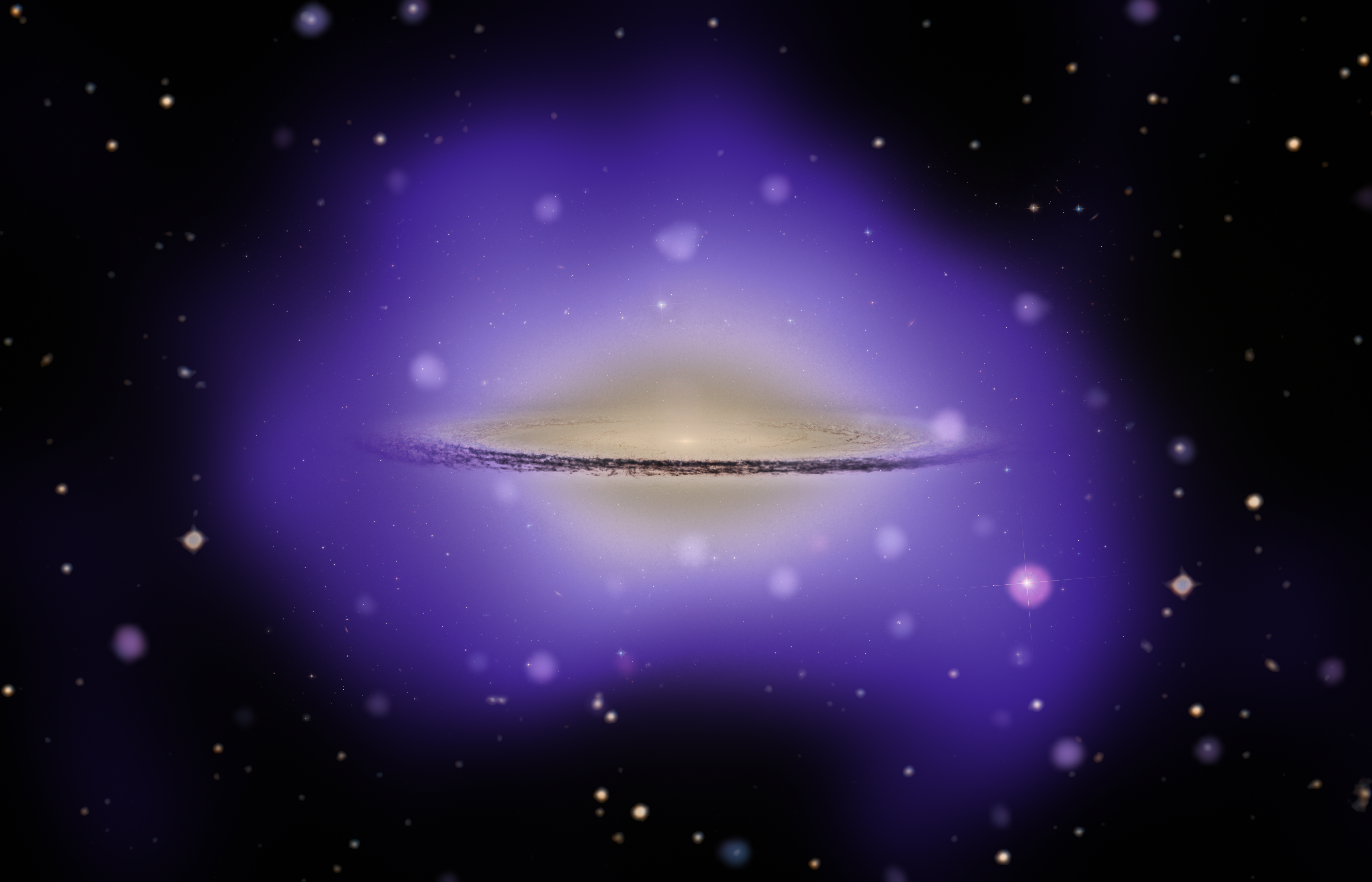
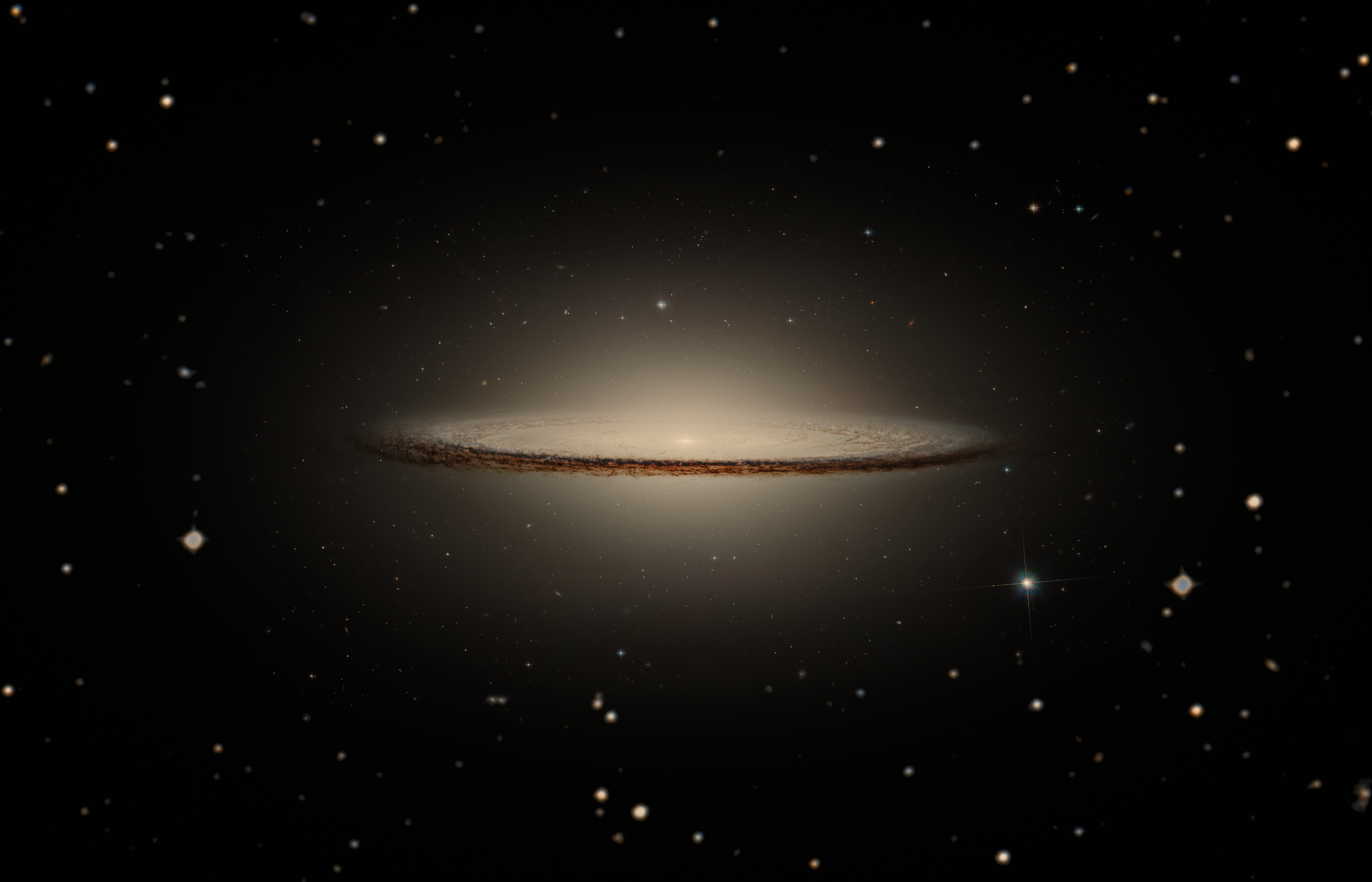
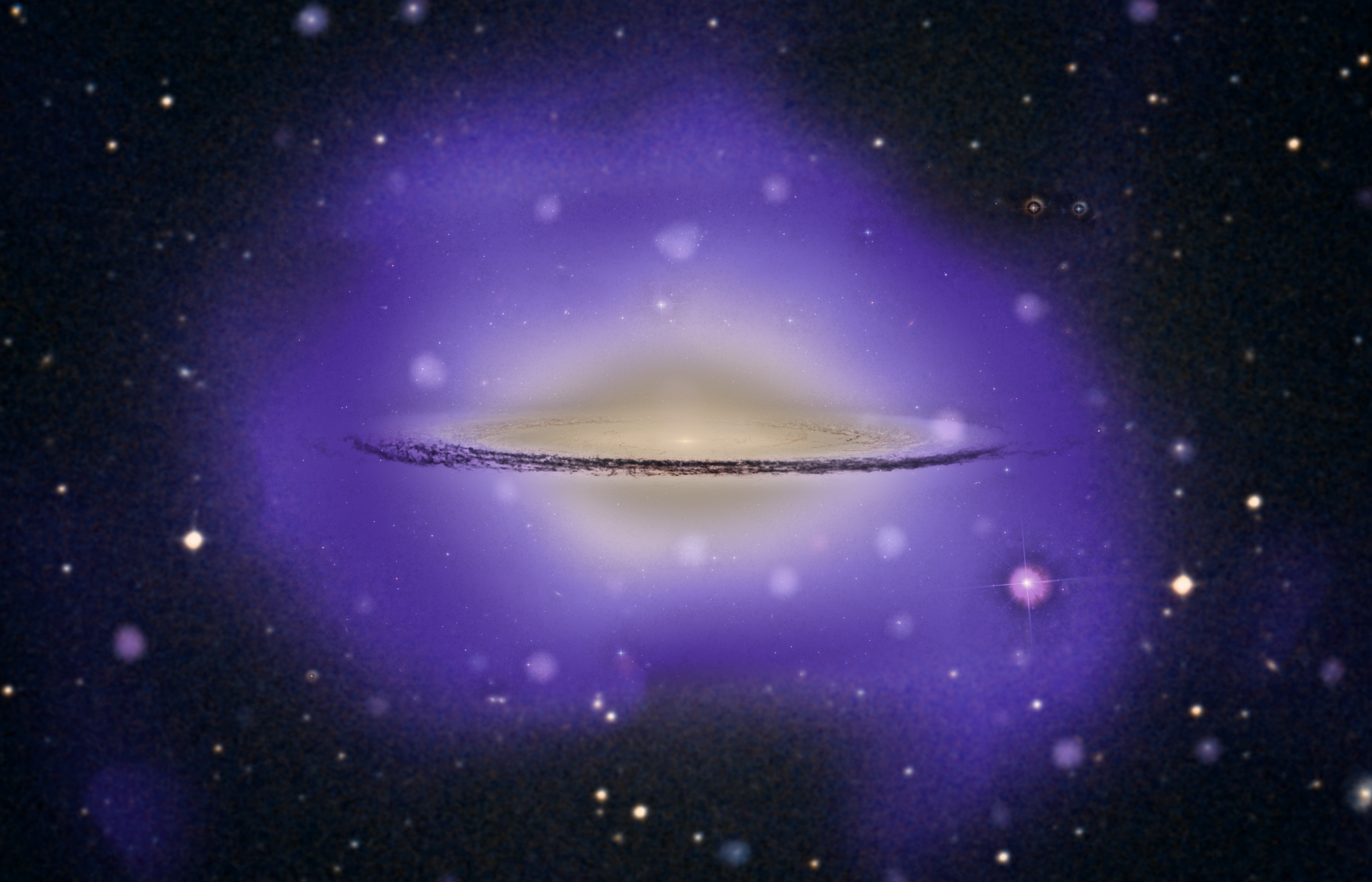
Beyond the dust lane imaged by Hubble, XMM-Newton sees an enormous blob of hot gas at roughly several million degrees (violet), enveloping the entire galaxy.
Version 2 · physical background zero level, HST extended base
The hot-gas zero level now uses the ESAS particle background plus the spectrally fitted sky background, so the halo fades continuously to the frame edge; the optical base extends the HST image itself outward, with no seams.

Version 1
Layers
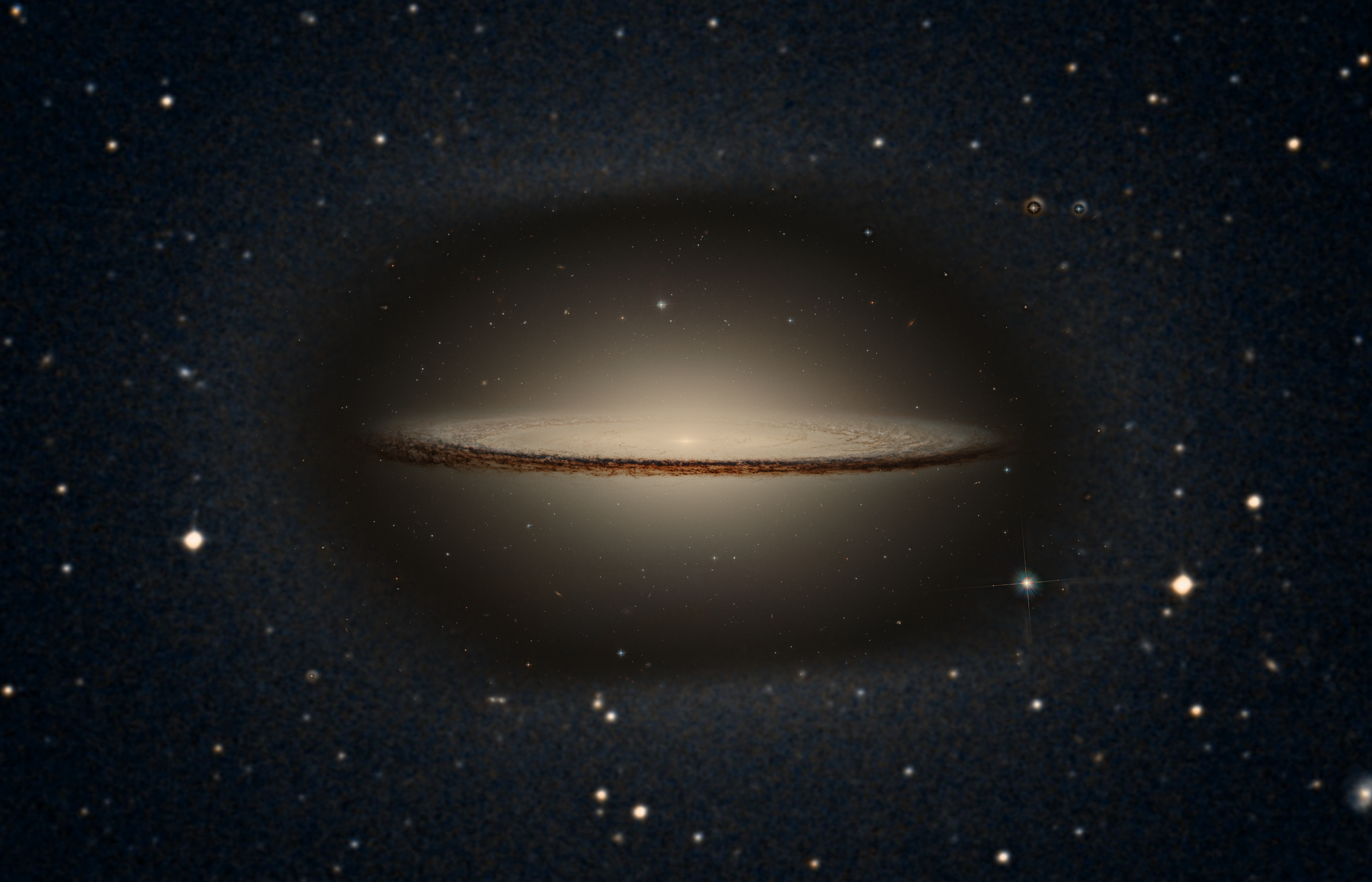

30′ wide-field versions
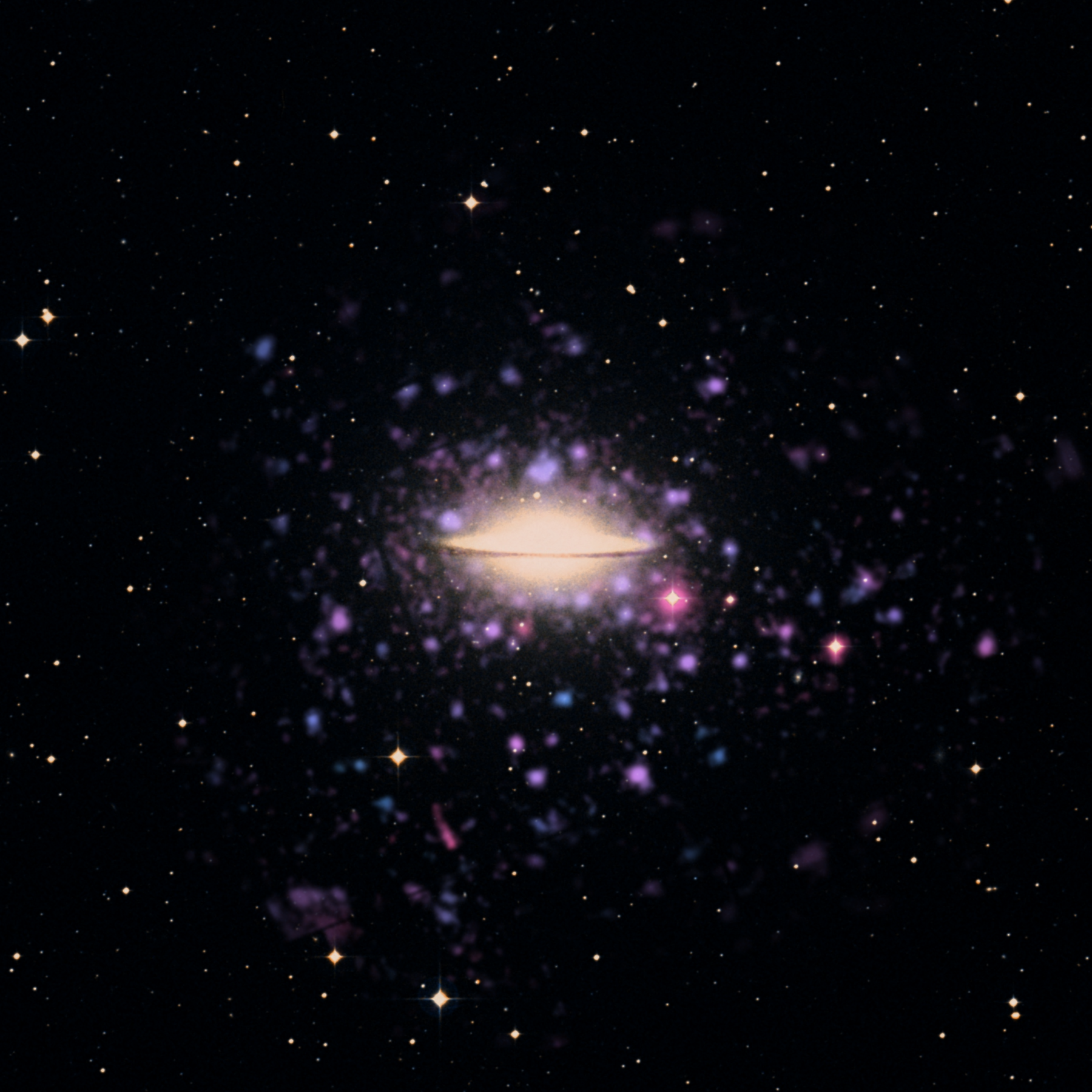
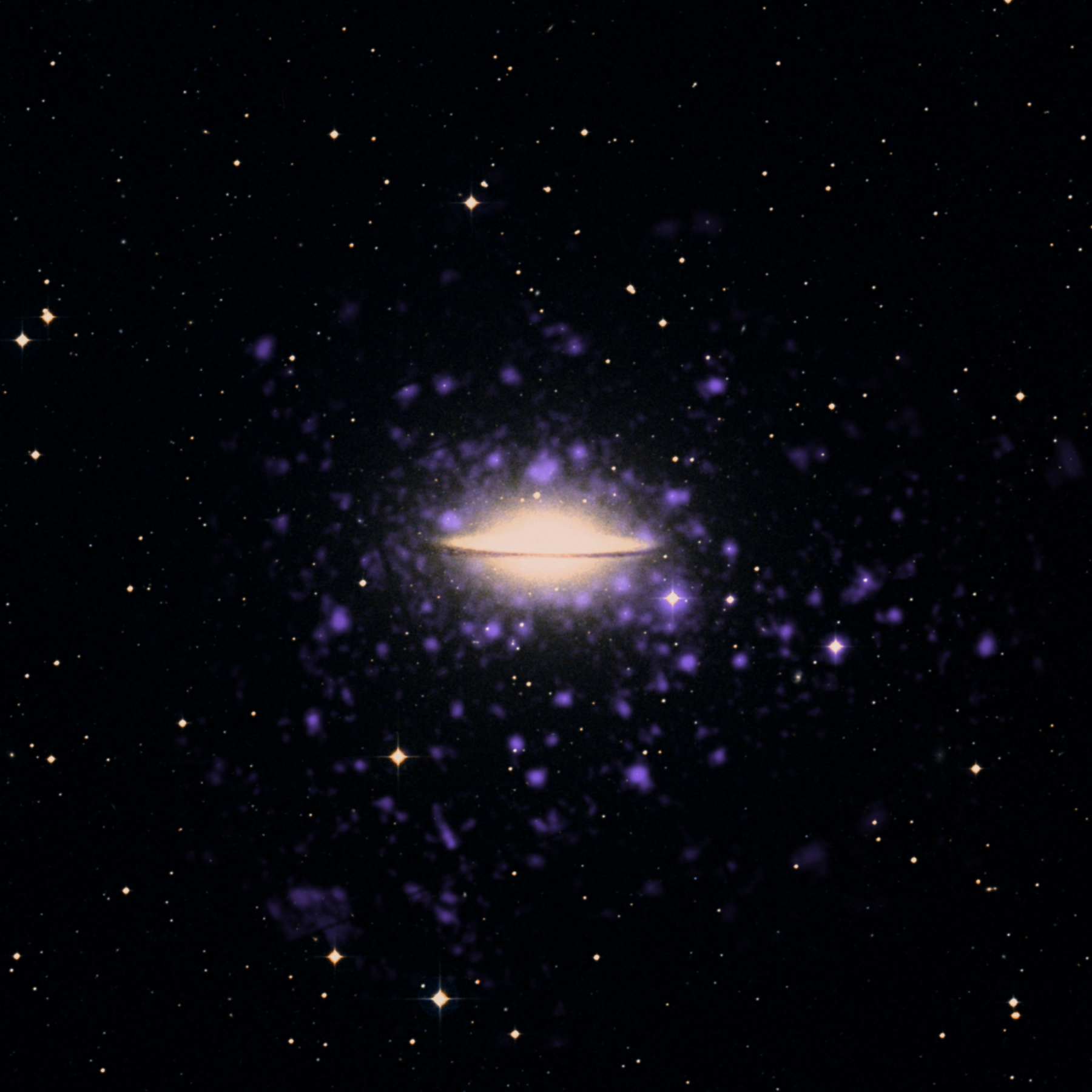
X-ray: ESA/XMM-Newton (EPIC, 0.5–4.5 keV, central exposure about 220 ks). Optical: ESA/Hubble & NASA, K. Noll (CC BY 4.0); DSS2. The hot-gas layer has point sources removed and large-scale adaptive smoothing applied; the outer glow is an artistically enhanced presentation for display purposes. In version 2 the galaxy halo beyond the HST field is extrapolated from its elliptical profile.